Couvent de La Tourette
Couvent de La Tourette : architecture, musée et visite incontournable
Situé à Éveux, dans le quartier Route de la Tourette, le Couvent de La Tourette a été conçu par l'architecte de renom Le Corbusier entre 1956 et 1959. Classé monument historique et inscrit au patrimoine mondial de l'UNESCO en 2016, ce couvent est une œuvre majeure de l'architecture contemporaine. Depuis son ouverture, il attire chaque année des visiteurs curieux de découvrir cette réalisation emblématique, mêlant spiritualité et modernité. Le site, autrefois réservé aux religieux, est aujourd'hui accessible pour des visites guidées, offrant un aperçu unique de l'œuvre de Le Corbusier et de son influence sur l'architecture moderne.
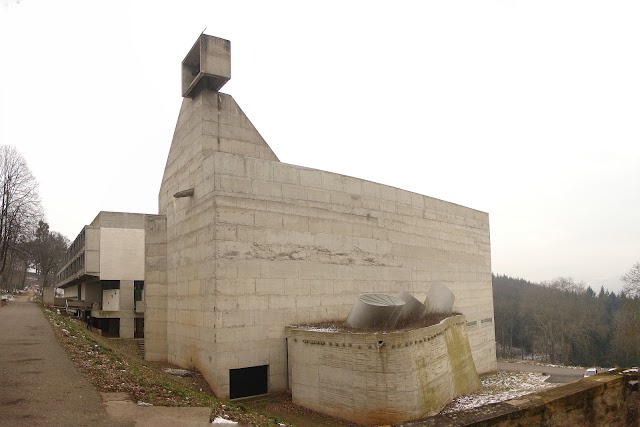
Le Couvent de La Tourette se distingue par ses spécialités, notamment son architecture en béton brut, ses espaces de méditation, ses expositions d'art contemporain et ses possibilités d'hébergement. Il propose également un centre culturel où l'on peut découvrir l'histoire et la conception du lieu, faisant de chaque visite une expérience enrichissante. La simplicité des matériaux et la rigueur des lignes confèrent à ce lieu une ambiance à la fois austère et inspirante, idéale pour une immersion dans l'univers de l'architecte et pour apprécier la beauté de cette œuvre d'art unique.
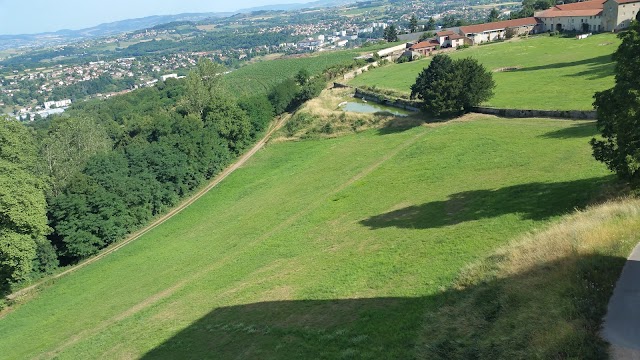
L'ambiance du couvent est à la fois sereine et contemplative, avec un décor épuré qui met en valeur la pureté de l'architecture de Le Corbusier. Situé en pleine nature, il offre un cadre propice à la méditation et à la réflexion. La lumière naturelle filtrant à travers les fentes horizontales accentue la sensation de calme et de spiritualité. Ce lieu, à la fois musée, site historique et espace de vie, invite à une exploration profonde de l'architecture et de la foi, dans un environnement où chaque détail a été pensé pour inspirer et apaiser.
Vos retours sont importants pour nous. Si vous avez remarqué une erreur concernant ce lieu, merci de nous en informer pour que nous puissions la corriger.
Nous récupérons automatiquement les informations disponibles sur votre lieu. Si jamais celles-ci ne sont pas correctes, connectez-vous gratuitement sur notre tableau de bord pour les modifier et bonus, accédez à vos statistiques détaillées.
Sovanna Mv
@sovanna.mv
"Le Corbusier"
Guide Vert MICHELIN Lyon et sa région
@guidevert
"Situé à flanc de coteau, le couvent dominicain de Ste-Marie-de-la-Tourette a été édifié de 1956 à 1959 sur les plans de Le Corbusier. C'est un remarquable exemple d'architecture moderne appliqué à la vie conventuelle. Les bâtiments, construits en béton brut, dessinent un quadrilatère fermé au nord par l'église. Celle-ci, très dépouillée, est éclairée latéralement par d'étroites fentes horizontales. Le couvent abrite un centre culturel et héberge les laïcs en retraite. Informations complémentaires : accès libre aux espaces extérieurs"

RHÔNE
@petitfute
"Un lieu à part, oeuvre d'art majeure en architecture du XX e siècle, mais avant tout un lieu de vie, de prière et de méditation unique en son genre. Construit de 1956 à 1959 par Le Corbusier, sous la direction des frères dominicains de Lyon, ce couvent est bien plus qu'un simple édifice religieux. Edifice de béton brut et de verre sur pilotis, il se caractérise par son austérité due à la simplicité des matériaux employés. Il est possible de suivre des visites guidées du couvent et l'on peut se balader dans les espaces extérieurs pour d'autres haltes méditatives."
pia_mbd
@pia_mbd
Deedee
@deedeeparis
Stephanie Zwicky
@stephaniezwicky
"Fait avec Marc - juillet 2026"
@
"La Tribune. Esthétique Brutaliste. Moines dominicains. Confort rudimentaire. 82€ dîner nuit et petit déjeuner. "
@
"Bâtiment conçu par Le Corbusier"
@
"Monastère par Le Corbusier "
@maellalnstr
"Œuvre de Le Corbusier. Classé MH. Possibilité de restauration le midi dans le réfectoire des frères. "
@
"à visiter !! trop beau tu peux dormir et manger "
@
"Le Corbusier, 1952 https://www.artribune.com/turismo/2025/02/storia-la-tourette-convento-disegnato-le-corbusier/?utm_source=Newsletter%20Artribune&utm_campaign=f93b434a2e-EMAIL_CAMPAIGN_2025_02_10_02_13&utm_medium=email&utm_term=0_dc515150dd-f93b434a2e-154517532"
@
"Contact : accueil@couventdelatourette.fr "
@
"couvent par le corbusier pour retraite spirituelle mdrr (61 euros la nuit et 20 euros le repas), ne pas hésiter à s'y terrer en cas de craquage"
@tanguybaudoin
"Le Corbusier (Charles-Édouard Jeanneret-Gris) et Fernand Gardien (1956-1960) Patrimoine mondiale de l'UNESCO (2016) Classé MH - Monument historique (1979 puis annexes en 2011) ACR - Architecture contemporaine remarquable (2003) Patrimoine mondiale de l'UNESCO (2016) Classé MH - Monument historique (1979 puis annexes en 2011) ACR - Architecture contemporaine remarquable (2003)"
@
"Dernière réalisation de Le Corbusier Trop de béton "
@mlmeunier31
"Le corbusier. Prendre le train "
@liselotte_
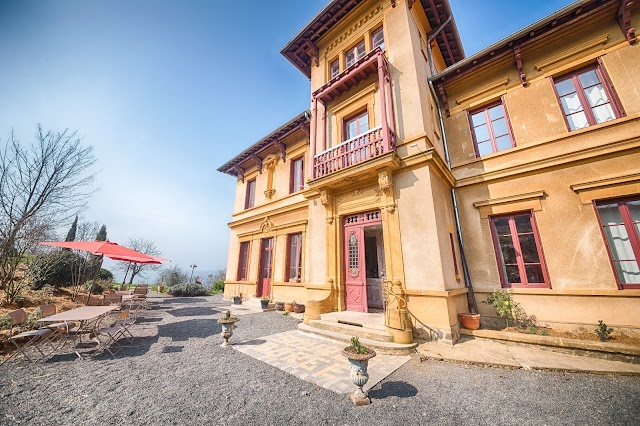
"chalets d hotes dans villa très belle vue permaculture en source dorée vers St bel"
@
"É stato un sogno venire qui, la prima opera di Le Corbusier della mia vita e non la dimenticherò mai! "
@
"Where architects stay This priory was designed by Le Corbusier opened 1961. There are single rooms designed by Renzo Piano to stay in. 9 cells, reservations two weeks in advance. "
@maria.masgard
"Situé à flanc de coteau, le couvent dominicain de Ste-Marie-de-la-Tourette a été édifié de 1956 à 1959 sur les plans de Le Corbusier. C'est un remarquable exemple d'architecture moderne appliqué à la vie conventuelle. Les bâtiments, construits en béton brut, dessinent un quadrilatère fermé au nord par l'église. Celle-ci, très dépouillée, est éclairée latéralement par d'étroites fentes horizontales. Le couvent abrite un centre culturel et héberge les laïcs en retraite. Informations complémentaires : accès libre aux espaces extérieurs"
@nathcharente
"Rando solo 19/01/24 . a visiter une prochaine fois ! "
@
"23/09/23 visite avec lolo"
@
"Couvent créé par le corbusier "
@
"Tenue par des religieux Spartiate "
@
"Couvent le Corbusier retraite "
@
"60€ la nuit, petit-déjeuner compris, si dîner 17€ Dans un bâtiment dessiné par Le Corbusier"
@
"gebouw van le corbusier nog altijd klooster maar je kunt er ook overnachten blijkt vanaf 56 euro te zijn om te overnachten https://www.worldofinteriors.com/story/living-by-the-rule-were-medieval-monks-just-like-us?uID=367a87209abcfd2e7aac86c719b4625e3ad2cc90a2a7c16271789268833ad92e&utm_source=newsletter&utm_brand=wo&utm_campaign=wo_weekly&utm_medium=email&utm_mailing=WOI_Weekly_090626&utm_term=WOI_WorldOfInteriorsNewsletter_Active Here’s how I organise things. I don’t eat breakfast: it makes me sluggish at a time when I’m already in danger of a critical failure of motivation. I mark birthdays with gifts, provided I have a funny, easy or cheap idea with enough time to realise it. If I really have to write, I leave the house. I naively instrumentalise a line in WH Auden’s grimly entropic poem ‘As I Walked Out One Evening’ – ‘Life remains a blessing / Although you cannot bless’ – as a kind of hopeful mantra. I try to keep to two pints of an evening, excepting cases of celebration, commiseration, good company, awful company or nice weather. When a reminder pops up on my phone on Tuesdays, I ask my housemate if she’d like to do some exercise with me, unless I am tired or have something else on (usually pints). I never write from personal experience. This may not strike you as a particularly regulated life, certainly by monastic standards – they are pragmatic rather than dogmatic rules, rules for tiding off malaise, dejection and idleness, rules full of break clauses and enforced at their administrator’s discretion. But they hold all of these qualities in common with the Rule of St Benedict (c530) – a foundational document for monasteries that proposed the domestic, interpersonal and temporal structures most conducive to harmonious holy co-living in the Middle Ages. Image may contain Clothing Glove Adult Person Accessories Glasses Indoors and Kitchen This anonymous photograph (16.2 x 12.6 cm) shows Dom Sylvester Houédard, a Benedictine priest and concrete poet, doing the dishes in his cream robes. Image courtesy of Dom Sylvester Houédard Archive, John Rylands Research Institute and Library, University of Manchester. © Prinknash Abbey Trustees Most Popular Inside Europe’s last ateliers Culture Inside Europe’s last ateliers Author: Alice Inggs Inside Alcuzcuz, the boutique hotel that once housed an aristocratic family Explore Inside Alcuzcuz, the boutique hotel that once housed an aristocratic family Author: Patrick Hamilton Courtney Collectors Andrea Zanatelli and Kenny Spooren make the ordinary extraordinary in Milan Interiors Collectors Andrea Zanatelli and Kenny Spooren make the ordinary extraordinary in Milan Author: Laura May Todd Advertisement Auden once said that ‘rhymes, meters, stanza forms, etc. are like servants. If the master is fair enough to win their affection and firm enough to command their respect, the result is an orderly happy household. If he is too tyrannical, they give notice; if he lacks authority, they become slovenly, impertinent, drunk and dishonest.’ Means of structuring life require similar moderation to those for structuring poetry – as, it emerges, Benedict of Nursia himself discovered first-hand. An earlier version of the saint’s programme was so strict that his monks tried to poison him. In the book accompanying their excellent Sainsbury Centre show Living by the Rule, Jessica Barker and Ed Krčma suggest that some memory of this episode is palpable in the bit of his Rule on drinking: It is […] with some uneasiness that we specify the amount of food and drink for others. However, with due regard for the infirmities of the sick, we believe that half a bottle of wine is sufficient for each. But those to whom God gives the strength to abstain must know they will earn their own reward… We read that monks should not drink wine at all, but since the monks of our day cannot be convinced of this, let us at least agree to drink moderately and not to the point of excess… Image may contain Plywood Wood Architecture Building and Wall Shields deliberately block off views at the end of corridors at the Le Corbusier-designed convent in Beaujolais. Photograph: Guillaume de Laubier Image may contain Cross Symbol Altar Architecture Building Church Prayer Indoors Interior Design and Person At the Convent of St Bonaventure, friar Sidival Fila turns fabric fragments into coveted pieces of contemporary art. Photograph: Simon Watson Most Popular Inside Europe’s last ateliers Culture Inside Europe’s last ateliers Author: Alice Inggs Inside Alcuzcuz, the boutique hotel that once housed an aristocratic family Explore Inside Alcuzcuz, the boutique hotel that once housed an aristocratic family Author: Patrick Hamilton Courtney Collectors Andrea Zanatelli and Kenny Spooren make the ordinary extraordinary in Milan Interiors Collectors Andrea Zanatelli and Kenny Spooren make the ordinary extraordinary in Milan Author: Laura May Todd Advertisement Pretty poison-proof stuff but hardly iron-bound. ‘At the time that St Benedict was writing, rules were seen as much more flexible things,’ explains Jessica. ‘Benedict’s rule allows a really great scope for discretion and interpersonal relationships to soften the regulations.’ Ed adds: ‘We wanted to set the idea of a rule as a model or a framework against the idea of it as a law or a regulation.’ These days, Jessica continues, we think that fair rules – at least as we encounter them as laws or company policy – are objective and impersonal; in the Middle Ages, they are personal and subjective. Fewer are our experiences, beyond some school teachers and line managers, with abbot figures who govern the tiny motions of our lives face to face; who therefore have to directly meet head-on the consequences of too much leniency or stringency. Monasteries, after all, were not just places for the devout to perfect their fervour, but workplaces – hospitals, charities, hostels, seats of research, gift shops – and, importantly, awkward exercises in sharing domestic space. Of admitting new monks, the author of Barnwell Priory’s Observances warned that ‘Brethren should be careful not to choose those of whose election they may afterwards repent.’ (I’ve often suspected a lot of Traitors banishments happen on similar grounds.) Image may contain Fireplace Indoors Architecture Building Interior Design Floor Book Publication Flooring and Bench A niche at Le Corbusier’s convent containing the organ overlooks the nave, whose stalls were originally designed for 80 student brothers and professors. Photograph: Guillaume de Laubier Most Popular Inside Europe’s last ateliers Culture Inside Europe’s last ateliers Author: Alice Inggs Inside Alcuzcuz, the boutique hotel that once housed an aristocratic family Explore Inside Alcuzcuz, the boutique hotel that once housed an aristocratic family Author: Patrick Hamilton Courtney Collectors Andrea Zanatelli and Kenny Spooren make the ordinary extraordinary in Milan Interiors Collectors Andrea Zanatelli and Kenny Spooren make the ordinary extraordinary in Milan Author: Laura May Todd Advertisement So what were monastic households like – orderly and happy, or slovenly, impertinent, drunk and dishonest? As far as I’m concerned, the really interesting thing is the ways in which our domestic lives today are both as regulated and as dysregulated as those of our tonsured forebears. Naturally, it wasn’t all getting pissed and poisoning line managers: monastic life was temporally prescribed in a very rigid way, around the eight canonical ‘hours’ – though it’s notable that these were not fixed, as our hours are, but shrank and dilated to suit the changing seasons – dedicated to prayer and chanting. The first of these, matins, was in the middle of the night, at around 2AM – Roger Ekirch’s discovery of the historic ‘two sleeps’, pervasive across much of the world until the 17th century, is still exhilarating in its alienness. But compare it to Susan Morris’s SunDial:NightWatch_Activity and Light 2010–2012, a work from 2017 displayed as one of Living by the Rule’s sharp contemporary counterpoints. For three years, the artist used a Fitbit-style biometric device to record her body’s sleep/wake patterns and levels of light exposure; this data she then translated into the warp and weft of a jacquard tapestry. You see the nights of insomnia, days she’s travelled to New York, intermittent sleep patterns – all the chaos, fitful restlessness and spontaneity of 21st-century life – but still, arcing in great curves over all, as it did for the Medievals, there is the shape of the seasons. All mapped and logged on a distinctly modern technology. Image may contain Canvas Indoors Interior Design Home Decor Art Painting and Blackboard Susan Morris, SunDial:NightWatch_Activity and Light 2010–2012 (herringbone weave), 2017. © the artist. Photograph: Michael Reisch Most Popular Inside Europe’s last ateliers Culture Inside Europe’s last ateliers Author: Alice Inggs Inside Alcuzcuz, the boutique hotel that once housed an aristocratic family Explore Inside Alcuzcuz, the boutique hotel that once housed an aristocratic family Author: Patrick Hamilton Courtney Collectors Andrea Zanatelli and Kenny Spooren make the ordinary extraordinary in Milan Interiors Collectors Andrea Zanatelli and Kenny Spooren make the ordinary extraordinary in Milan Author: Laura May Todd Advertisement Image may contain Bronze Accessories Bracelet and Jewelry A 10th-century portable sun dial. Courtesy Canterbury Museums and Galleries But it’s striking that we’ve always sought to automate means for organising and accounting for ourselves, precisely because it has never been easy. Rotas, which those who have housemates or teenagers might be familiar with, are an analogue technology monks used to dispense chores and account for work; morning lauds mark the beginning of these offices, like a punch card. Trending Video Casa Fornasetti From the great rotating calendar used in Verona’s San Zeno Basilica, wielded to work out sunrise and sunset for any day of the year, to the nifty little USB-like device from Christ Church in Canterbury – state of the art in the tenth century, this is in fact a portable sundial – monks had no shortage of time-structuring innovations; gentle reminders, like candles marked with hour lines, and great water-clock alarms and the sounding of church bells. Our Pomodoro timers, Google calendars and Notes-app to-do lists are just the latest in a long line of ways to outsource personal regulation. In the mode of journals and period trackers, abjection, too, was effectively priced in: daily chapterhouse meetings included the airing of grievances among the order of business, and monks would be preventatively bloodlet at least four times a year, to keep their humours in check. A pleasing parallel presents itself in the personalised-nutrition app Zoe’s yellow biometric leeches. Image may contain Outdoors Food Produce and Nature In May 1996, Marie-France Boyer visited a Medieval priory garden in Orson, France, dutifully recreated with reference to illuminated manuscripts. Photograph: Deidi von Schaewen Most Popular Inside Europe’s last ateliers Culture Inside Europe’s last ateliers Author: Alice Inggs Inside Alcuzcuz, the boutique hotel that once housed an aristocratic family Explore Inside Alcuzcuz, the boutique hotel that once housed an aristocratic family Author: Patrick Hamilton Courtney Collectors Andrea Zanatelli and Kenny Spooren make the ordinary extraordinary in Milan Interiors Collectors Andrea Zanatelli and Kenny Spooren make the ordinary extraordinary in Milan Author: Laura May Todd Advertisement Image may contain Grass Plant Garden Nature Outdoors Lawn Backyard Yard and Field The rectangular lawn surrounded by priory buildings is planted in rotation with broad beans, cabbages and different kinds of wheat – taking cues from Charlemagne. Photograph: Deidi von Schaewen Buildings, of course, are the great technologies for ordering life – the apotheosis of ‘rule’ as framework. Monasteries are serious-minded expressions of this: Gothic arches to discipline the eye upwards, cloisters to avert it from the temptations of the world – often towards gardens, as fruitful with metaphors for the rewards of spiritual cultivation as they were, God willing, with literal produce. Rooms were built strictly for purpose, and monastic complexes were designed so their communities might have everything they’d need on site; but vibrant hue and decoration were not eschewed, for all the ruins would have us believe. As I sit in the Barbican to write this, where carefully controlled views by turns funnel, deny and overwhelm the gaze, it’s easy to see why Modernists like Le Corbusier were drawn to these places: his monastery in Beaujolais (WoI Feb 2015) veers between spare cells designed in line with his body-orientated Modulor system and spaces that open into vivid colour, as fundamental to life, he held, as ‘water and fire’. Like models and frameworks, the great thing about buildings is there’s room for manoeuvre; in Medieval monasteries, misericords (the undersides of folding choir seats) allowed relief both from the endless standing to chant and from architectural purpose: comedy carved brothers showing their bottoms or a lion battling a wyvern are such decorative reprieves. Under the high ceilings of this Brutalist fort, I watch as people repurpose work tables to play dominoes; now two students share stifled giggles over a video on a phone. Beneath their feet, a mouse surreptitiously snaffles a fallen crisp. Most Popular Inside Europe’s last ateliers Culture Inside Europe’s last ateliers Author: Alice Inggs Inside Alcuzcuz, the boutique hotel that once housed an aristocratic family Explore Inside Alcuzcuz, the boutique hotel that once housed an aristocratic family Author: Patrick Hamilton Courtney Collectors Andrea Zanatelli and Kenny Spooren make the ordinary extraordinary in Milan Interiors Collectors Andrea Zanatelli and Kenny Spooren make the ordinary extraordinary in Milan Author: Laura May Todd Advertisement Image may contain Floor Flooring Plywood Wood Indoors Restaurant Cafeteria Chair Furniture Dining Table and Table Dotted with Jasper Morrison chairs, the refectory of the Couvent Sainte-Marie de La Tourette lies next to the chapterhouse, where, when this image was taken, the lauds, mass and vespers are celebrated every day. Photograph: Guillaume de Laubier ‘One of the things we wanted to insist on,’ says Ed, ‘is that, far from just being about transcendence, any spiritual practice worth its salt is absolutely in the bodily stuff, the everyday stuff, habit, how you are with others. The grain of everyday life is where you’re going to get those rewards.’ The exhibition boasts the largest collection of mazers, or Medieval drinking bowls, ever brought together; in contravention of regulations on precious metal adornments, monks jazzed up their humble wooden vessels – some as big as salad bowls – with metal ‘repairs’ and rim bling. Though monks were not meant to own their own things, these were definitively personal possessions, often kept long after their users had died. Ingenious rule-bending suggests lives that share much with what we might consider modern inventions: dinners taken side by side in Benedictine silence, as an improving text was read aloud, rhyme with modern-day tea and telly. Instead of miming using a cellar, ‘pass the salt’ in monastic sign language – suggested by St Benedict and highly developed in the course of the Middle Ages – would have been a sprinkling gesture, while a wine top-up would’ve been indicated with the swift motion showing a spigot pulled from a barrel, but the point remains. Just as it does in the period’s raucous marginalia, it is easy to see how undocumented gestures might allow clandestine clowning to brighten repetitious days."
@
"De tempel Le Corbusier. Bedevaartsoord 56€ per nacht. "
@
"Architectes: Le Corbusier et Iannis Xenakis"
@
"Couvent réalisé par Le Corbusier "
@
"couvent imagine par Le Corbusier. Possible d'y dormir et également lieu d'expositions d'art contemporain."
@
"monastère oeuvre du Corbusier. on peut y dormir et expo art contemporain "
@
"Signé le Corbusier (53-61) son dernier projet. Une dizaine de dominicains y résident.Expositions d’art (2022 G.Penone)"
@
"Le corbusier 1960 et Iannis Xenakis "
@
"UNESCO : Œuvre de le Corbusier : « son œuvre représente une création majeure du génie humain »"
@octave_ps
"Monastère construit par Le Corbusier"
@
"Situé à flanc de coteau, le couvent dominicain de Ste-Marie-de-la-Tourette a été édifié de 1956 à 1959 sur les plans de Le Corbusier. C'est un remarquable exemple d'architecture moderne appliqué à la vie conventuelle. Les bâtiments, construits en béton brut, dessinent un quadrilatère fermé au nord par l'église. Celle-ci, très dépouillée, est éclairée latéralement par d'étroites fentes horizontales. Le couvent abrite un centre culturel et héberge les laïcs en retraite. Informations complémentaires : accès libre aux espaces extérieurs"
@
"Un lieu à part, oeuvre d'art majeure en architecture du XX e siècle, mais avant tout un lieu de vie, de prière et de méditation unique en son genre. Construit de 1956 à 1959 par Le Corbusier, sous la direction des frères dominicains de Lyon, ce couvent est bien plus qu'un simple édifice religieux. Edifice de béton brut et de verre sur pilotis, il se caractérise par son austérité due à la simplicité des matériaux employés. Il est possible de suivre des visites guidées du couvent et l'on peut se balader dans les espaces extérieurs pour d'autres haltes méditatives."
@
"Couvent Sainte-Marie de la Tourette, LE CORBUSIER 1956-60"
@miss.sixtine.lefranc
"Per fer retir. Recomanació: Xesca, Miquelbi Fu"
@
"Couvent franciscains dessiné par Le Corbusier. En activité, se visite."
@
"Signé par Le Corbusier, ce couvent est un lieu unique. 50 cellules individuelles pension ou demi-pension pour se recentrer quelques jours."
@girlsmaketime
"Couvent Dominicain de le Corbusier, ballade de 2km autour"
@
"Visite sur commande visite guidée "
@
"Kloster von Le Corbusier, nur mit Führung zu besichtigen, extrem spannend!"
@
"Il fait peur, mais c'est signé le Corbusier."
@
"Il fait peur, mais c'est signé le Corbusier."
@
"Le corbusier - brutalisme "
@alexvial
"Dimanche vers 14h. En semaine de septembre à mi novembre"
@
"Visites guidées le dimanche"
@
"Le corbusier - visite de fev 18"
@
"Le corbusier. Expo lee ufan"
@