

Arab Street


Découverte d'Arab Street à Singapour : un incontournable
Arab Street, située dans le quartier malais de Singapour, s’est imposée comme un lieu emblématique depuis sa popularisation. La rue a connu un essor notable avec ses boutiques de textiles, ses cafés bohèmes et ses galeries d’art, attirant touristes et locaux depuis plusieurs années. La mosquée Sultan Mosque, monument historique, domine le paysage et confère à cette rue une identité forte. La visite de ce quartier offre une immersion dans la culture locale, mêlant shopping traditionnel et découvertes architecturales. Les boutiques de tapis, tissus et habits traditionnels font la renommée de cette adresse, idéale pour une balade enrichissante. Arab Street est aussi réputée pour ses restaurants turcs, libanais, et ses cafés dépaysants, parfaits pour une pause gourmande. L’ambiance y est chaleureuse, avec ses façades colorées et son décor mêlant histoire et modernité, ce qui en fait un lieu incontournable pour une visite authentique à Singapour.
Vos retours sont importants pour nous. Si vous avez remarqué une erreur concernant ce lieu, merci de nous en informer pour que nous puissions la corriger.
Nous récupérons automatiquement les informations disponibles sur votre lieu. Si jamais celles-ci ne sont pas correctes, connectez-vous gratuitement sur notre tableau de bord pour les modifier et bonus, accédez à vos statistiques détaillées.
 Modifier les informations de votre lieu
 ATLAS
600 North Bridge Rd Singapore 188778 North Bridge Rd, Singapore 188778
Ajouté par1160 utilisateurs
ATLAS
600 North Bridge Rd Singapore 188778 North Bridge Rd, Singapore 188778
Ajouté par1160 utilisateurs
 Mr Stork
5 Fraser St, Singapore 189354
Ajouté par459 utilisateurs
Mr Stork
5 Fraser St, Singapore 189354
Ajouté par459 utilisateurs
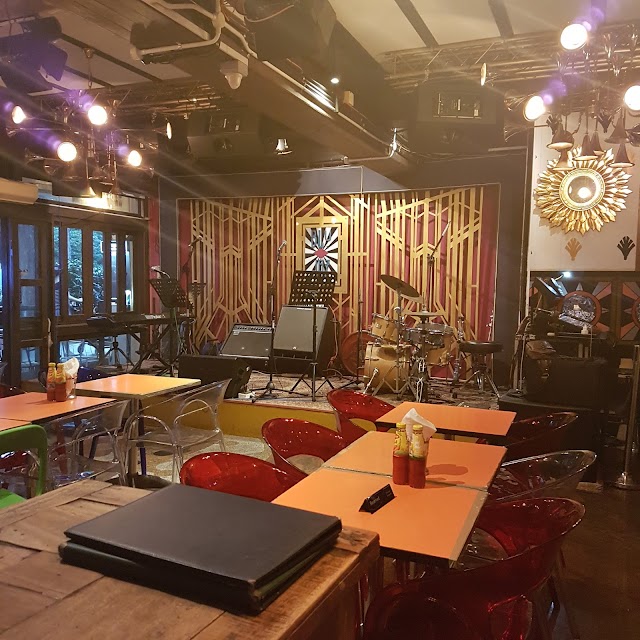 Blu Jaz Cafe
11 Bali Lane, Historic Kampong Glam, Singapour 189848
Ajouté par410 utilisateurs
Blu Jaz Cafe
11 Bali Lane, Historic Kampong Glam, Singapour 189848
Ajouté par410 utilisateurs
 Masjid Sultan
3 Muscat Street, Singapour 198833
Ajouté par365 utilisateurs
Masjid Sultan
3 Muscat Street, Singapour 198833
Ajouté par365 utilisateurs
 Singapore Zam Zam
697-699 N Bridge Rd, Singapour 198675
Ajouté par327 utilisateurs
Singapore Zam Zam
697-699 N Bridge Rd, Singapour 198675
Ajouté par327 utilisateurs
 Symmetry
9 Jln Kubor, Singapour 199206
Ajouté par230 utilisateurs
Symmetry
9 Jln Kubor, Singapour 199206
Ajouté par230 utilisateurs
 Cicheti
52 Kandahar Street, Singapour 198901
Ajouté par229 utilisateurs
Cicheti
52 Kandahar Street, Singapour 198901
Ajouté par229 utilisateurs
 Piedra Negra
241 Beach Rd, Singapore 189753
Ajouté par207 utilisateurs
35 Haji Ln
35 Haji Ln, Singapore 189228
Ajouté par195 utilisateurs
Piedra Negra
241 Beach Rd, Singapore 189753
Ajouté par207 utilisateurs
35 Haji Ln
35 Haji Ln, Singapore 189228
Ajouté par195 utilisateurs
 Bar Stories
55-57A Haji Lane, Singapour 189248
Ajouté par190 utilisateurs
Bar Stories
55-57A Haji Lane, Singapour 189248
Ajouté par190 utilisateurs
"Arab Street à Singapour est une rue vibrante aux façades colorées. Connu pour ses boutiques de textiles, ses cafés bohèmes, et ses petites galeries d'art, le quartier offre une ambiance décontractée avec ses bâtiments historiques et la mosquée emblématique Sultan Mosque. Cependant, le quartier est assez touristique, donc pas forcément authentique à 100%, mais il reste agréable à explorer."
@pernellevoyage
"Rue avec plein de resto turcs, libanais, … C’est dépaysant donc je recommande "
@eugenieduffour
"Moschea e zona con ristoranti/negozi da visitare"
@valeriaromanot
"Voir hijab lane et la mosquée masjid sultan"
@chakir078