


Vous pensez qu'il y a une erreur sur ce lieu ?
Signaler une erreur
Vos retours sont importants pour nous. Si vous avez remarqué une erreur concernant ce lieu, merci de nous en informer pour que nous puissions la corriger.
Propriétaire de ce lieu ?
Nous récupérons automatiquement les informations disponibles sur votre lieu. Si jamais celles-ci ne sont pas correctes, connectez-vous gratuitement sur notre tableau de bord pour les modifier et bonus, accédez à vos statistiques détaillées.
 Modifier les informations de votre lieu
Ce qu'en disent les utilisateurs
Autres lieux à voir autour
 Arkaba Homestead
Chaîne de Flinders Australie-Méridionale 5434, Australie
Ajouté par5 utilisateurs
 Flinders Ranges National Park
Blinman SA 5730, Australie
Ajouté par21 utilisateurs
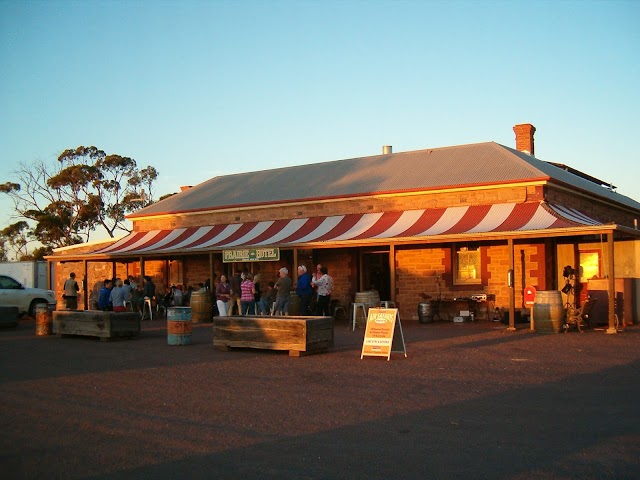 Prairie Hotel
High St & West Terrace, Parachilna SA 5730, Australie
Ajouté par16 utilisateurs
 Wilpena Pound Resort
Wilpena Rd, Via Hawker SA 5434, Australie
Ajouté par14 utilisateurs
 Rawnsley Park Station
Flinders Ranges Way, Hawker SA 5434, Australie
Ajouté par13 utilisateurs
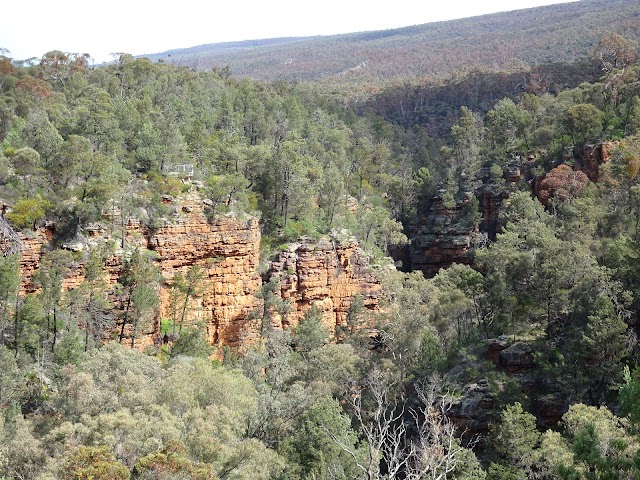 Alligator Gorge
Wilmington SA 5485, Australie
Ajouté par7 utilisateurs
 Parc national du Mont Remarkable
Australie-Méridionale 5540, Australie
Ajouté par6 utilisateurs
 Chaîne de Flinders
 Australie-Méridionale 5434, Australie
Ajouté par6 utilisateurs
 Australian Arid Lands Botanic Garden
144 Stuart Hwy, Port Augusta SA 5700, Australie
Ajouté par4 utilisateurs
 Archers' Table
11 Loudon Rd, Port Augusta West SA 5700, Australie
Ajouté par4 utilisateurs
"The Flinders Ranges are better known for spectacular scenery than for great birdwatching. When I think of the Flinders Ranges, I think of dry creekbeds lined with ancient river red gums, dramatic rugged mountain ranges and half a dozen euros peering inquisitively through the morning mist over a hillside covered with spinifex. But there are good birds here too. Red-capped Robins and Mallee Ringnecks are common. Galahs are so abundant we take them for granted. A soaring Wedge-tailed Eagle is a breathtaking sight no matter how often you see it. Of course, there are always Emus, Australian Magpies and Australian Ravens. In fact, there are 146 species on the list. The national park is in the northern Flinders Ranges, between Hawker and Blinman, 450 kilometres north of Adelaide. The park comprises 912 square kilometres of picturesque South Australian outback. Without a doubt the most sought-after bird in the Ikara-Flinders Ranges National Park is the Short-tailed Grasswren, always difficult to see-as I can attest. I will not admit here how many hours I have wasted trying to see this little bird. Suffice it to say that, had I spentthe time productively, I might have replicated the managed to see my Short-tailed Grasswren (with Bayeux tapestry or qualified as a jet pilot, I finally professional help) in 2013. The most common honeyeaters are Yellow-throated Miners and handsome Spiny-cheeked Honeyeaters with their distinctive friendly call. Less common are Singing, White-plumed, subtiv understated Brown-headed and prized Grey-fronted Black Kites are often seen patrolling the roads in the early morning searching for some unlucky creature killed in the night. Red-backed Kingfishers sit quietly in the gum trees, often overlooked until they fly. Elegant Parrots, so aptly named, flash past in a rush or walk unobtrusively on the ground. There are Purple-backed and striking White-winged Fairywrens, darling small Southern Whiteface and pretty Redthroats. Pigeons are represented by Common Bronzewings, endearing Peaceful Doves and comical, now almost ubiquitous. Crested Pigeons. Give any bird a crest and it turns into a veritable clown. Crested Pigeons are full of character and their footprints make most artistic patterns in the sand. White-browed Babblers are clowns too. They are often seen in the park and their Chestnut-crowned cousins are sometimes seen too. You can hear Weebills make their disproportionately loud call for such a tiny bird (indeed this is Australia's smallest bird) and Striated Pardalotes are vocal throughout the park. The Flinders Ranges has many special birds, and birdwatchers will not be disappointed, unless, like me, all they want to see is a Short-tailed Grasswren. Or maybe they will be successful in this - with or without professional assistance."
@benbirder