





Vous pensez qu'il y a une erreur sur ce lieu ?
Signaler une erreur
Vos retours sont importants pour nous. Si vous avez remarqué une erreur concernant ce lieu, merci de nous en informer pour que nous puissions la corriger.
Propriétaire de ce lieu ?
Nous récupérons automatiquement les informations disponibles sur votre lieu. Si jamais celles-ci ne sont pas correctes, connectez-vous gratuitement sur notre tableau de bord pour les modifier et bonus, accédez à vos statistiques détaillées.
 Modifier les informations de votre lieu
Ce qu'en disent les utilisateurs
Approuvé par 1 partenaires officiels


Autres lieux à voir autour
 Alila Jabal Akhdar
Nizwa, Oman
Ajouté par485 utilisateurs
Alila Jabal Akhdar
Nizwa, Oman
Ajouté par485 utilisateurs
 The St. Regis Al Mouj Muscat Resort
Al Mouj, Muscat, Oman
Ajouté par17 utilisateurs
The St. Regis Al Mouj Muscat Resort
Al Mouj, Muscat, Oman
Ajouté par17 utilisateurs
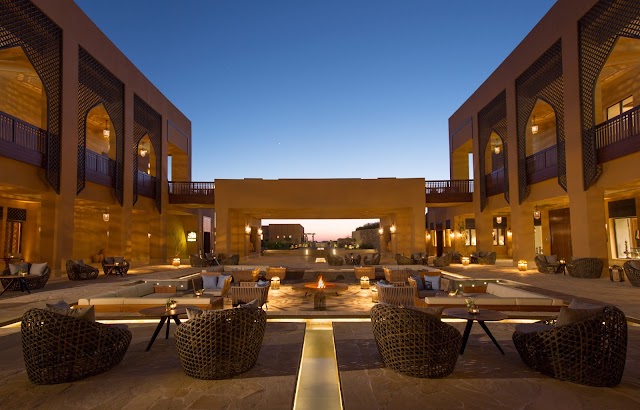 Anantara Al Jabal Al Akhdar Resort
No 110, Al Jabal Al Akhdar, Nizwa 621, Oman
Ajouté par264 utilisateurs
Anantara Al Jabal Al Akhdar Resort
No 110, Al Jabal Al Akhdar, Nizwa 621, Oman
Ajouté par264 utilisateurs
 Nizwa Fort
Nizwa, Oman
Ajouté par154 utilisateurs
Rozna Restaurant
Muscat, Oman
Ajouté par94 utilisateurs
Nizwa Fort
Nizwa, Oman
Ajouté par154 utilisateurs
Rozna Restaurant
Muscat, Oman
Ajouté par94 utilisateurs
 Nizwa Souk
Nizwa, Oman
Ajouté par92 utilisateurs
Nizwa Souk
Nizwa, Oman
Ajouté par92 utilisateurs
 Jibreen Castle حصن جبرين
Bahla, Oman
Ajouté par76 utilisateurs
Jibreen Castle حصن جبرين
Bahla, Oman
Ajouté par76 utilisateurs
 Ad Dimaniyat Islands
, Oman
Ajouté par63 utilisateurs
Ad Dimaniyat Islands
Ad Dimaniyat Islands, Oman
Ajouté par63 utilisateurs
 Aéroport international de Mascate
Mascate, Oman
Ajouté par63 utilisateurs
Aéroport international de Mascate
Mascate, Oman
Ajouté par63 utilisateurs
 The View
jebel shams, Oman
Ajouté par61 utilisateurs
The View
jebel shams, Oman
Ajouté par61 utilisateurs
"Nous sommes passés devant mais n’avons pas eu le temps de nous y arrêter - à voir "
@valentin.michel
"Le plus beau fort des montagnes omanaises "
@shantitravel_moyen_orient
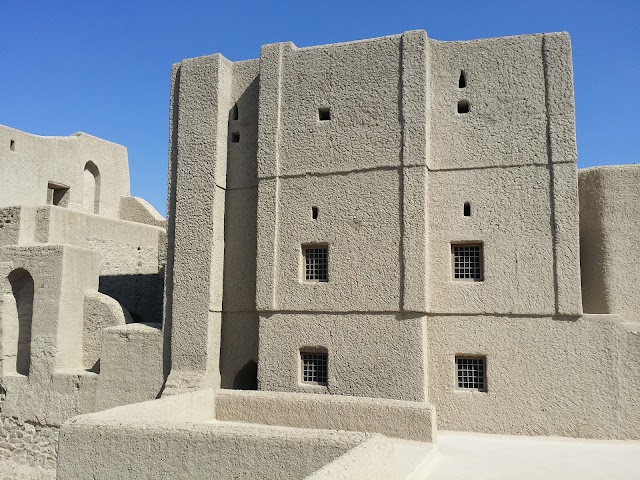
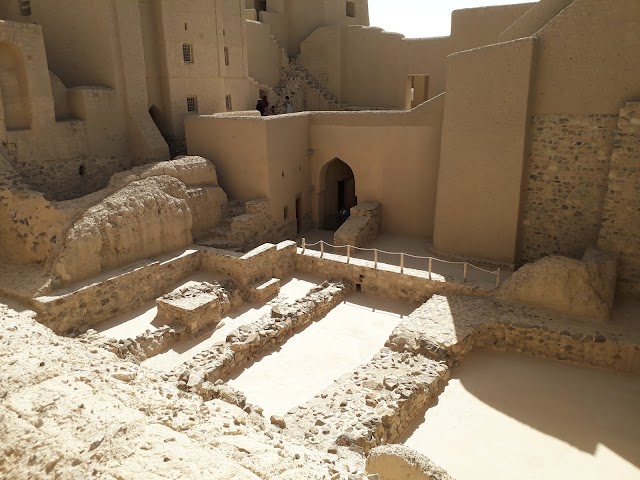
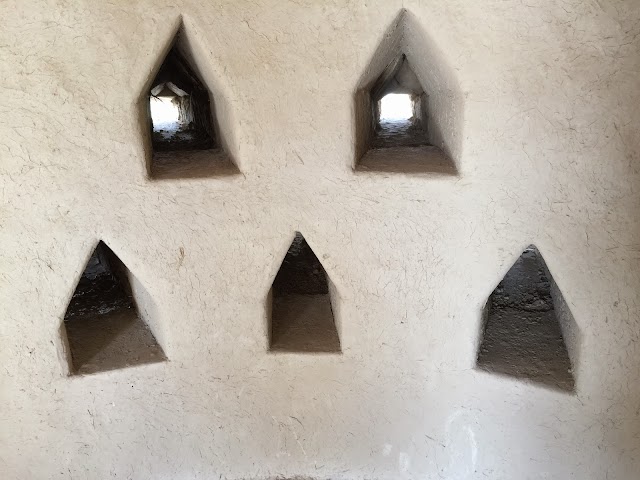
"UNESCO heritage list > One of the finest examples of a medieval Islamic fortified oasis settlement Bahla is one of four fortresses lying at the foot of the Jebel Akhdar highlands in Oman. Although evidence suggests that Bahla was settled and fortified from the first millennium BCE, the current fort was built by the Banu Nebhan tribe, which controlled much of Oman from the 12th to 15th centuries CE. The vast fort attests to the wealth of the Nebhani dynasty, accumulated through its dominance of the Middle Eastern trade in frankincense. Bastion in the desert Resting on sandstone foundations, 50m (164ft) above the oasis settlement that surrounds it, the fort is constructed in mud-brick. Inside the Al-Qaabah ("citadel"), there is a labyrinth of cells and chambers, with walls punctuated by openings through which boiling water or date juice could be poured on attackers. The outer walls, 13 km (8 miles) long, enclose the entire oasis settlement, including the Friday Mosque, family compounds, audience halls, bath houses, and the remains of a semi-covered market. After restoration, the fort was opened to the public in 2012."
@nchavotier